


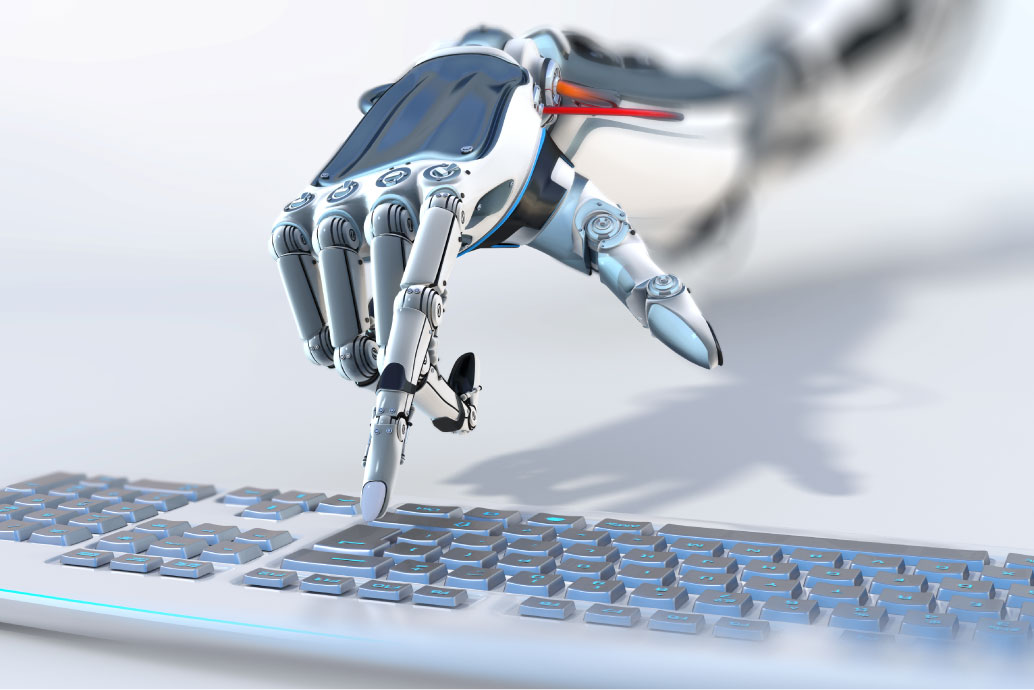
The expansion of artificial intelligence in customer service has created a silent side effect: consumers are demanding more autonomy, not necessarily more technology Joao Paulo Ribeiro, CEO of the Inove Group and a specialist in service culture, when analyzing recent transformations in operations of large Brazilian companies. According to him, the next frontier of the customer experience is not in the speed of response, but in the sense of control over the journey itself.
“The customer only trusts when he understands that he remains in charge. Automation that does not respect this becomes an obstacle, not an” solution, he says. With 14 years of experience ahead of complex operations, Ribeiro realizes a clear pattern, companies that have advanced too fast in digitization have created cycles of dependence between human and machine, congesting operations and weakening the relationship with the consumer.
The trend, he said, is the emergence of models that offer alternative routes within automated flows. “It is not about creating shortcuts, but about giving the customer the power to decide when they want to solve alone and when they want to be served by someone”, he explains.
The new consumption is with less passivity, more participation
Ribeiro says that one of the most recurrent mistakes of companies is to believe that consumers want fully autonomous journeys. What they seek, in practice, is active participation.He observes this movement in sectors such as retail, health, delivery, aviation and financial services.
“Automation has been built with a focus on the company, not the customer. When the consumer enters a flow that does not allow intervention, he understands that he has lost autonomy and that is where the” frustration is born, he says.
This phenomenon, according to the expert, explains the increase in complaints about bots that prevent human contact, IVRs that function as a maze and applications that hide essential options. “A automation cannot hijack the experience. It needs to return clarity and freedom”.
The hidden risk of over-reliance on AI
Ribeiro warns that some companies already face a new operational problem, entire journeys that only work if the AI works perfectly. This creates critical dependence, especially in times of high volume, product launches, crises or seasonal peaks.
According to the CEO, this model generates intangible losses because it weakens the element that should be more protected, trust. “When all service depends on AI, a small error becomes chaos.
He recommends that companies adopt journey designs with dual architecture, in which AI and human coexist as parallel and secure paths.“The customer needs to feel that there is an exit door, and not just an” entry door, he says.
The client wants efficiency, but does not want to be protected
Ribeiro proposes that the market adopt a new concept, empathic automation, a model that combines autonomy, clarity and personalized rhythm.Instead of a journey that pushes the customer to where it is efficient for the company, empathic automation creates flexible trails based on three pillars:
- Freedom of choice ''the customer decides when to continue in the automated flow or trigger a human;
- Path transparency ^the journey makes explicit the available alternatives;
- Contextual interaction ia and human share the same understanding of the case, without restarting history.
For the expert, this approach reduces friction, increases trust and transforms cost center service into a value generator.“A automation that respects the customer is not the one that responds quickly.It is the one that does not oblige the consumer to accept an experience that he did not ask for”, he says.
Where the industry is heading now
Ribeiro's diagnosis is that Brazil is entering a phase of cultural readjustment of automation. After years of accelerated digitization, companies begin to understand that speed without coherence does not deliver experience, only volume.
He notes that more mature operations are already rebuilding flows to allow:
- immediate human recovery in critical cases;
- AI that supports but does not control the journey;
- reduction of hidden layers within digital channels;
- continuous analysis of perception, not just productivity;
- routing models that prioritize customer intent before problem category.
“The next competitive advantage lies in automation that returns voice to the customer. Everything that takes autonomy weakens the brand. Everything that returns autonomy strengthens”, he concludes.


 Português do Brasil
  English
  Español
  Deutsch
  香港中文
香港中文  Русский
  हिन्दी
  Français
  Italiano
  日本語
日本語  العربية
  繁體中文
繁體中文  বাংলা
বাংলা  Български
  Čeština
  Dansk
Dansk  Ελληνικά
  Suomi
Suomi  Hrvatski
  Magyar
  Bahasa Indonesia
  한국어
한국어  Lietuvių kalba
  Nederlands
  Norsk bokmål
  Polski
  Português de Angola
  Português
  Română
  Slovenčina
  Slovenščina
  Svenska
  ไทย
ไทย  Türkçe
  Українська
  Tiếng Việt
  简体中文
简体中文  Afrikaans
  Íslenska
  Luxembourgish
  Bosanski
  Հայերեն
  Shqip
Shqip  Kiswahili
  فارسی
فارسی  Српски језик
  اردو
اردو  Latviešu valoda
  Català
  Eesti
Eesti  Bahasa Melayu