

Commencement Site Página 721

Research reveals high adoption of technologies in Brazilian retail and growth of e-commerce apps

A survey conducted by the Locomotiva Institute and PwC revealed that 88% of Brazilians have already used some technology or trend applied to retail. The study highlights that buying in marketplaces is the most adopted trend, with 66% of membership, followed by withdrawal in physical stores after online purchase (58%) and automated online service (46%).

The survey also showed that nine out of ten consumers prioritize brands that offer pleasant shopping experiences, practicality in delivery and actions aimed at sustainability. Renato Meirelles, president of the Locomotiva Institute, points out that Brazilians still buy a lot in physical stores, despite preferring to purchase certain products over the internet.

Although physical stores remain the most frequent experience, some products already have a predominance of online shopping, varying according to the category. Electronics and various courses have greater adherence to e-commerce, while supermarkets, building materials and hygiene and beauty products are still more purchased in physical stores.

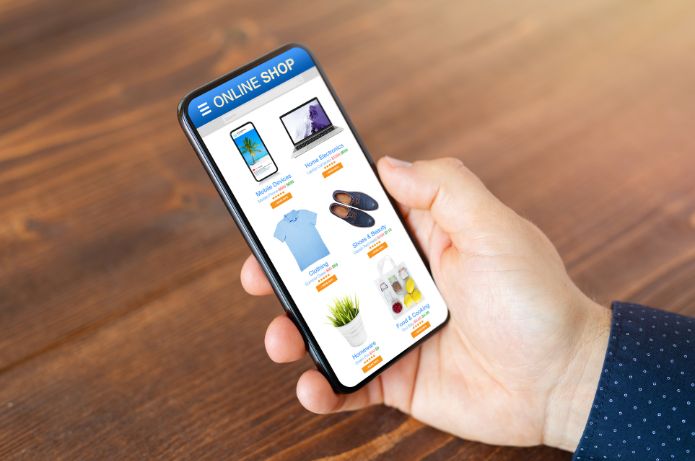
In parallel, the e-commerce application market is on the rise.According to Adjust's annual Mobile App Trends report, there has been an increase of 43% in installations and 14% in virtual commerce app sessions in 2023. Bruno Bulso, COO of Kobe Apps, states that this growth reflects consumers' growing preference for mobile shopping experiences.

Latin America stood out by registering an increase in the average time spent per session in e-commerce apps, contrary to the global trend.In addition, Shein's leadership in the ranking of the most downloaded applications in the world highlights the need for brands to expand their digital channels for applications.

Brazil, ranked as the fourth country in the world with the most app downloads in 2023, demonstrates the growing importance of mobile devices in the lives of Brazilian consumers. Experts point out that the omnichannel journey, integrating physical stores and applications, is a determining factor for the finalization of purchase and consumer loyalty.


Essential points to have a competitive e-commerce

E-commerce continues to grow. Figures from the Brazilian Association of Electronic Commerce (ABComm) indicate a turnover of R$ 73.5 billion in the first half of 2022. This is a growth of 5% compared to the same period of 2021. 

This increase is aided by the virtual stores enable the sale of products to all regions of Brazil, for example. In addition to providing differentiated gifts for different styles and celebrations. However, an important point for the full operation of the store is an engaged team.

For an e-commerce to explore the potential, it is necessary to use strategies in all sectors - production, inventory, logistics, SAC, after-sales - TO offer a complete experience to customers. Thus, there are three fundamental pillars for an e-commerce to thrive: strategic planning, quality products and an efficient SAC.

The planning consists of selecting the products that the company will sell, taking good photos and producing creative texts and content that attract the consumer. It is also essential to know the partners, check the expiration date of perishable products, evaluate the form of logistics, meeting deadlines and all the details that may eventually disrupt the customer experience.

Quality products are a basic premise in any store, whether online or physical. When buying for their own use or to gift, there is every care to research the versions, sizes, colors, in addition to financial and affective investment. In this way, the customer can take into account the store where they made the purchase and, at a next opportunity, return to the location.

The differentiated SAC, in turn, can contribute to customer return to e-commerce. It is an essential tool to harvest feedbacks, both positive and negative, from consumers, and thus, perfect the experience.

The habit of buying over the internet is a reality in the country, because it is a practical, efficient, comfortable, and often fast way, according to the logistics process.It has become a path that must follow in parallel with the physical environment, so it is necessary to be careful to meet the best possible way the expectations of consumers.

Expansion beyond e-commerce: how to differentiate strategies for retailers?

With a lot of determination and planning, it is possible to increase profit even in times of crisis. Despite the political and economic scenario in Brazil, combined with the post-pandemic, the Brazilian entrepreneur is resilient. According to the Map of Companies Bulletin, in 2022, the country hit record opening of companies, with microenterprises and MEIs. In the first four months of the year, 1.3 million new companies were born.

For those who work in e-commerce, sales showed a drop this year, after the boom research by the Brazilian Association of Electronic Commerce (ABComm) indicates that there was growth of 5% in the first half of 2022, when more than 6% was expected for online sales.

In this scenario, those who work in the segment need to invest in strategies that aim at expansion beyond the sale over the internet. In search of a broader audience, which aims to solve the demands on various platforms. It is important to expand the possibilities, joining e-commerce to the option of physical stores, kiosks in shopping malls and marketplaces.

Units that sell in person bring the possibility of evaluating the product, checking the material and having contact with the item before making the investment. The stimulation of various senses, such as touch, smell, hearing, vision and even taste can make a difference in the shopping experience. Personal contact is more welcoming and increases the reliability of a business. Talking with the seller is a factor that impacts the purchase journey of a customer, so physical stores have this advantage.

When the store is on the street, it is possible to offer a more personalized experience, focusing on the product and the customer. But the kiosks in shopping malls and shopping centers also have the same benefits and earn points on the side of practicality, since the consumer can solve other issues in the same environment.

marketplace, in turn, is a business model that revolutionized online retail, connecting different retailers to customers. According to a survey by Ebit Nielsen, these collaborative environments already have 78% of participation in e-commerce in Brazil. In addition, this mode of sales is one of the favorites of consumers.

According to the survey of the French company Mirakl, 86% of Brazilians identify the marketplaces as the most satisfactory way to make purchases online. Another opportunity for the entrepreneur to gain strength and go beyond traditional e-commerce IO joining the most diverse possibilities to your business.

Tramontina launches B2B e-commerce to expand reach and facilitate business purchases

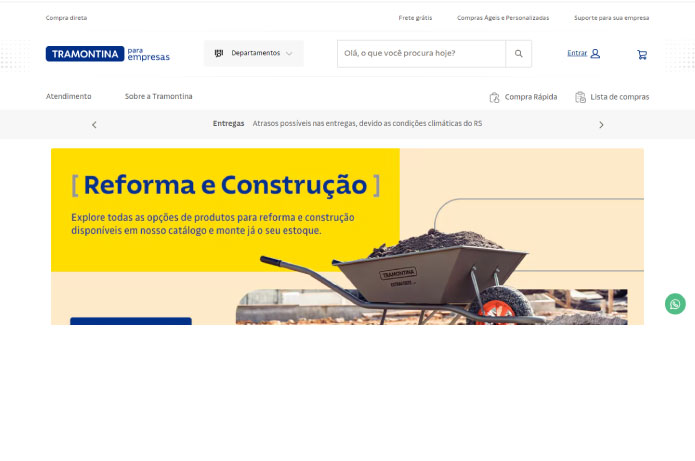
Tramontina, a renowned Brazilian company of utensils and tools, announced the launch of its e-commerce platform exclusive for B2B (business-to-business) sales and for use and consumption. This initiative marks an important digital expansion of the brand, complementing the traditional service by representatives and offering a new way of interaction with business customers.

The new online channel, available at empresas.tramontina.com.br, allows customers to access the company's vast portfolio, which includes more than 22 thousand items.The range of products covers from household appliances and tools to furniture, also serving the hospitality and food service segments, including restaurants, bars, coffee shops and hotels, as well as retailers, wholesalers and resellers.

Among the main benefits of the platform are:

  1. Agile and personalized shopping
  2. Complete order management, including those made online and by representatives
  3. Specialized support tailored to the specific needs of each client
  4. Free shipping for orders that meet the minimum purchase amount

This initiative by Tramontina represents a significant step in the digitalization of its sales processes, aiming at a closer relationship with the brand and facilitating the business management of its business customers.The company expects this new B2B sales channel to enhance its reach in the market and offer a more efficient and convenient shopping experience for its corporate customers.

Anatel releases list of e-commerce sites with illegal mobile ads; amazon and Mercado Livre lead ranking

The National Telecommunications Agency (Anatel) revealed last Friday (21) the results of a surveillance carried out on e-commerce sites, focusing on mobile ads without official certification or that entered the country illegally.

According to the report, Amazon and Mercado Livre presented the worst statistics. On Amazon, 51,52% of mobile phone ads were from non-approved products, while in Mercado Livre this number reached 42,86%. Both companies were classified as “ not in accordance with” and should exclude irregular ads, under penalty of fine and possible removal from the websites.

Other companies, such as Lojas Americanas (22,86%) and Grupo Casas Bahia (7,79%), were considered “partially compliant” and will also need to make adjustments. On the other hand, Magazine Luiza did not submit any illegal ad registrations, being classified as “ and Carrefour, although with no percentages disclosed, were listed as ”conforms“ commitments to Anatel.

Anatel President Carlos Baigorri pointed out that negotiations with e-commerce companies have been taking place for about four years.He specifically criticized Amazon and Mercado Livre for not having engaged in the collaborative process.

The inspection took place between June 1 and 7, using a scanning tool with 95% precision.Anatel reported that, after focusing on mobile phones, the agency will investigate other products illegally marketed without approval.

The precautionary measure published today aims to give another opportunity for companies to adapt to the standards, starting with mobile phones.Anatel pointed out that other companies, in addition to the seven largest retailers mentioned, are also subject to the same requirements.

Magazine Luiza and AliExpress announce new partnership in e-commerce

Magazine Luiza and AliExpress have entered into a landmark agreement that will allow cross-selling of products on their respective e-commerce platforms.This partnership marks the first time the Chinese marketplace will make its products available for sale by a foreign company, in an unprecedented cross-border strategy.

The collaboration aims to diversify the catalog of both companies, taking advantage of the strengths of each. While AliExpress is known for its variety in beauty items and technological accessories, Magazine Luiza has a strong presence in the market of home appliances and electronics.

With this initiative, the two platforms, which together total more than 700 million monthly visits and 60 million active customers, expect to significantly increase their sales conversion rates. The companies ensure that there will be no changes in tax policies for consumers and that the guidelines of the Conformity Shipping program will be maintained, including the exemption of fees for purchases below US$ 50.

The announcement of the partnership was well received by the financial market, resulting in a valuation of more than 10% in Magazine Luiza shares, which had been facing a fall of almost 50% in the year.

This collaboration represents an important milestone in the Brazilian and international e-commerce scenario, promising to expand the purchase options for consumers and strengthen the position of both companies in the market.

Deliveries and prices: how to build customer loyalty in e-commerce?

Philip Kotler, in his book “” Marketing Administration”, states that winning a new customer costs five to seven times more than maintaining the current ones. After all, for the recurring customer it is not necessary to devote effort in marketing to present the brand and gain confidence. This consumer already knows the company, the service and the products.

In the online environment, this task is more strategic due to the lack of experience face to face. loyalty to customers in e-commerce requires some specific actions to satisfy the consumer, strengthen the relationship and make him buy more often.

The finding may seem obvious, but it is only possible to retain buyers who were satisfied with the experience they had. If they are dissatisfied because of an error in the payment process or in the time-consuming delivery, for example, they may not return and still speak ill of the brand.

On the other hand, loyalty is also advantageous for the consumer. When discovering a reliable e-commerce, with quality products and fair price, good service and on-time deliveries, he does not wear out and starts to see that store as a reference. This generates trust and credibility that the company serves him in the best way.

In this scenario, two elements are fundamental to ensure the loyalty process: deliveries and prices. It is interesting to know some essential strategies to strengthen these operations, especially in the virtual environment:

1) Investment in last mile 

The last phase of delivery to the consumer is one of the keys to ensure a good experience. In a company with national capillarity, for example, it is essential to close partnerships with local organizations, which can handle deliveries in a more personalized way. In addition, a tip is to promote exchanges and training with regional deliverymen so that the order arrives in perfect condition and with the face of the brand. Finally, this strategy still cheapens costs and reduces consumer freight, bringing a solution to one of the main pains of the online sales market today.

2) Packaging

The time to pack the product is important. Treating each delivery as unique, taking into account the packaging needs and peculiarities of each item is essential to ensure good handling.In addition, customizing deliveries with personalized touches makes the difference, such as handwritten cards, perfume sprayed and sending gifts.

3) Omnichannel

Having data tools and a thorough and careful analysis is fundamental in an enterprise to bring this experience to the consumer. The benefits are numerous. First, there is more assertive communication and smarter strategies when we implement the omnichannel, since the user has a unified experience online and offline. The service becomes even more personalized and accurate.

4) Marketplace

The entry into a wider environment of offers allows varied shopping options. Thus, it is possible to meet the most diverse needs of the public, bringing alternatives to all tastes and styles. Today, the tool has become essential for e-commerce. It is necessary to offer diversified options, with assertive solutions to the demands of the public, as well as focus on different offers with low price options.

5) Inclusion

Finally, thinking about inclusive platforms enables democratic service and reaches an even larger audience. Offering purchases by phone or WhatsApp, as well as serving people in a personalized way by SAC are alternatives widely used today.

Marketplaces in Brazil record 1.12 billion hits in May, according to report

May saw the second highest number of hits in marketplaces in Brazil this year, according to the Brazilian E-commerce Sectors Report, produced by Conversion. Throughout the month, Brazilians accessed 1.12 billion times sites such as Mercado Livre, Shopee and Amazon, behind only January, when there were 1.17 billion hits, driven by Mother's Day.

Mercado Livre leads with 363 million hits, followed by Shopee and Amazon Brazil

Mercado Livre maintained the lead among the most accessed marketplaces, registering 363 million hits in May, an increase of 6.6% compared to April. Shopee was in second place, with 201 million visits, showing a growth of 10.8% compared to the previous month. For the first time, Shopee surpassed Amazon Brazil in number of hits, which was in third place with 195 million hits, an increase of 3.4% compared to April.

E-commerce billing maintains growth trend in May

In addition to the access data, the report also presents information on e-commerce billing, obtained by Conversion from Valid Sale data.In May, billing followed a growth trend, as well as the number of accesses, registering a high of 7.2% and maintaining the trend started in March, driven by Women's Day.

Positive prospects for June and July, with Valentine's Day and winter holidays

This growth trend is expected to continue in June, with Valentine's Day, and possibly extend until July, with sales for the winter holidays in much of the country.

Betminds releases first season of “Digital Commerce & the” Podcast”

Betminds, a marketing agency and digital business accelerator focused on e-commerce, announced the launch of the first season of “Digital Commerce (THE” Podcast.The new project will bring together professionals from the main brands of Curitiba to discuss, in a relaxed way, relevant topics in the world of e-commerce, such as performance marketing, management, logistics, industry and retail, in addition to the main trends in the sector.

The goal is to foster relationships and share insights

Tk Santos, CMO of Betminds and host of the podcast, highlighted that the main objective of the project is “to foster the relationships of those who work with e-commerce in Curitiba, showing the great cases of the city”, the podcast seeks to bring insights and trends for managers to make their operations more efficient“.

Rafael Dittrich, CEO of Betminds and also host of the podcast, added: “In the day-to-day of e-commerce we ended up staying only in the operation and the idea of the podcast is to bring this look of what managers are doing in the routine and that could be a solution for other businesses”.

First episode discusses hybrid e-commerce and marketplace strategy

The premiere episode of “Digital Commerce (Podcast” was attended by Ricardo de Antonio, Marketing and Performance Coordinator of MadeiraMadeira, and Mauricio Grabowski, E-commerce Manager of Balaroti. The theme addressed was “Hybrid e-commerce and marketplace”, where guests discussed the main challenges of operating a marketplace in conjunction with a traditional virtual store, as well as the ideal time to make this transition in the business model.

Upcoming episodes will feature participation from industry experts

For the next episodes, the participation of Luciano Xavier de Miranda, Director of E-commerce Logistics of Grupo Boticario, Evander Cassio, General Manager of Logistics of Balaroti, Rafael Hortz, E-commerce Manager of Vitao Alimento, and Liza Rivatto Schefer, Head of Marketing and Innovation of Vapza Vacuum Packed Foods are already confirmed.

Interested parties can check out the first episode of “Digital Commerce & the” Podcast on Spotify and YouTube.

Cart abandonment is harmful and should be reversed, says expert

A survey conducted by Opinion Box, entitled “Abandono de Carrinho 2022”, with more than 2000 consumers, revealed that 78% of respondents have the habit of giving up a purchase when arriving at the final stage, with the value of freight the great motivator of this practice known as cart abandonment.

Ricardo Nazar, a specialist in Growth, points out that cart abandonment is a very harmful practice for the entrepreneur. “You need to be aware of this type of behavior so that well-defined strategies are developed, after all, the customer went through all the stages of the purchase and did not finish. What may have caused this?”, explains Nazar.

The survey also pointed out other reasons that lead to cart abandonment, such as cheaper products on other sites (38%), discount coupon that does not work (35%), charging for unexpected services or fees (32%) and very long delivery time (29%).

Nazar suggests that a good technique to try to bring the customer back is direct contact.“Whether by email, WhatsApp or SMS offering a discount or advantage the likelihood of a prospect finalizing the purchase increases a lot”, says the expert. This strategy is corroborated by the survey numbers, which show that 33% of respondents consider “very likely” the chance of finalizing the abandoned purchase in the face of an offer proposal made by the store.

The research also investigated the factors that contribute to the purchase decision in an e-commerce. The biggest fear of consumers is to be the victim of some kind of scam, with 56% of respondents prioritizing the reliability of the site. Other important aspects are lower prices (52%), promotions and offers (51%), previous shopping experience (21%), ease of navigation (21%) and variety of payment methods (21%).