


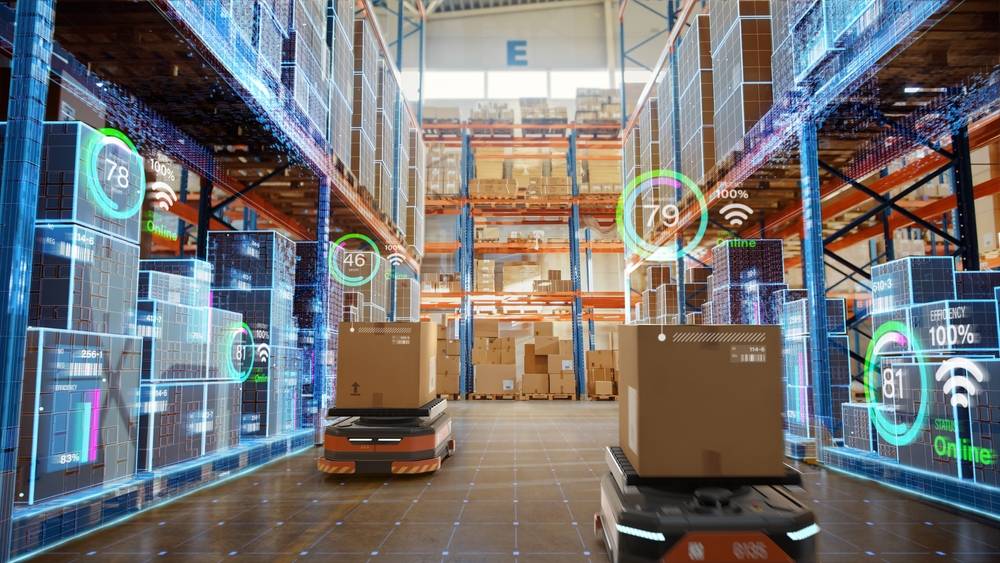
The single distribution center, which for many years was the basis of the logistics operation of much of the retail sector, is no longer the only answer to an increasingly digital, regionalized and delivery time-driven market. With the advancement of e-commerce and omnichannel, companies began to rethink the way they position their stocks, replacing concentrated models with more flexible networks, formed by regional distribution centers, logistics hubs and physical stores used as shipping points.
This transformation responds to a change in consumer behavior, whose purchasing journey is no longer linear and begins to take place across different channels. According to the Mapa da Busca no Brasil 2026 study, by Optimiza Marketing in partnership with AB Pesquisas, 89.8% of searches for products and services are carried out on smartphones. Discovery occurs distributed across marketplaces, search engines, social networks and brands' own channels, while 46% of online purchases are completed on marketplaces, 25.7% on brands' own websites and apps and 10.1% via WhatsApp Commerce. For retailers, this means serving consumers who move through multiple channels and expect the same agility regardless of the origin of the order, making logistics integration an essential factor in sustaining this experience.

Therefore, the decentralization of stocks gained ground. Instead of making all orders come from a single structure, retailers began distributing products at different strategic points, bringing stock closer to the end consumer. This strategy reduces last-mile distance traveled, increases operational flexibility, and improves the ability to meet promised deadlines.
Models such as ship from store, which uses physical store inventory to fulfill digital orders, are an example of this evolution. By transforming stores into shipping points, retailers expand their service capacity without relying exclusively on the expansion of large logistics structures. The strategy also makes it possible to make better use of existing assets, especially in categories where availability and speed directly influence the purchasing decision, such as fashion, beauty and cosmetics, pharmacies, supermarkets, food, pets and electronics.
The dispersion of stocks can generate important gains in time, cost and consumer experience, but it requires a much more integrated operation. Having several storage points does not, in itself, mean having more efficient logistics. It is necessary to guarantee visibility over product availability, integrate sales channels and define, in real time, the most appropriate point of origin for each order.
Therefore, technology starts to play a central role in this process. Operations with multiple distribution centers, dark stores and stores functioning as hubs need platforms capable of identifying where the product is available, directing shipment and organizing the last mile considering factors such as deadline, distance and operational capacity. Without this intelligence, decentralization can increase complexity, generate fragmented inventories, and compromise efficiency.
One of the main challenges of this model is precisely preparing the different stock points to act in a coordinated manner. Traditional distribution centers usually operate with accuracy levels greater than 99.5%, while physical stores typically have rates between 70% and 90%, according to McKinsey. The data shows that, to transform stores into efficient shipping centers, it is necessary to invest in processes, technology and training to ensure that the operation maintains the quality expected by the consumer.
The strategy also varies depending on the size of the companies. Large chains have adopted combinations of regional distribution centers, urban hubs and physical stores as service points. Medium-sized retailers tend to advance more gradually, taking advantage of existing structures and relying on specialized partners to expand their logistics capacity without necessarily making large investments in infrastructure.
The movement does not mean the disappearance of large distribution centers. They will continue to play an important role in supplying, consolidating products and organizing operations. The change is in the way they become part of a broader network, connected by technology and made up of different points of origin capable of serving the consumer more quickly and efficiently.
This is a trend that is expected to intensify in the coming years with the growth of e-commerce in Brazil. According to the Brazilian Association of Artificial Intelligence and E-commerce (ABIACOM), the Brazilian market for the sector is expected to increase from R$ 259.08 billion in 2026 to R$ 379.31 billion in 2030, increasing the demand for more widespread operations prepared for different purchase and delivery formats.
In the future of retail logistics, the single DC will no longer be the absolute protagonist and will become part of a logistics ecosystem that is more connected, flexible and prepared for new consumer expectations.
*Norton Canali is commercial director at EuEntrego.com, a logtech that connects retailers with the largest network of independent delivery people in Brazil. – Email: euentrego@nbpress.com.br.


 Português do Brasil
  English
  Español
  Deutsch
  香港中文
香港中文  Русский
  हिन्दी
  Français
  Italiano
  日本語
日本語  العربية
  繁體中文
繁體中文  বাংলা
বাংলা  Български
  Čeština
  Dansk
Dansk  Ελληνικά
  Suomi
Suomi  Hrvatski
  Magyar
  Bahasa Indonesia
  한국어
한국어  Lietuvių kalba
  Nederlands
  Norsk bokmål
  Polski
  Português de Angola
  Português
  Română
  Slovenčina
  Slovenščina
  Svenska
  ไทย
ไทย  Türkçe
  Українська
  Tiếng Việt
  简体中文
简体中文  Afrikaans
  Íslenska
  Luxembourgish
  Bosanski
  Հայերեն
  Shqip
Shqip  Kiswahili
  فارسی
فارسی  Српски језик
  اردو
اردو  Latviešu valoda
  Català
  Eesti
Eesti  Bahasa Melayu
  English (Australia)
  English (Canada)
  English (UK)
  English (New Zealand)
  English (South Africa)
  Cebuano
  Acehnese
  Bhojpuri
  Français de Belgique
  ಕನ್ನಡ
ಕನ್ನಡ  Deutsch (Schweiz, Du)
  Deutsch (Österreich)
  كوردی
كوردی  नेपाली
  Беларуская мова
  Quechua
  རྫོང་ཁ
  Español de Costa Rica
  Español de Argentina
  Español de Chile
  Español de Colombia
  Español de República Dominicana
  Español de Ecuador
  Español de Guatemala
  Español de México
  Español de Perú
  Español de Puerto Rico
  Español de Uruguay
  Español de Venezuela
  Français du Canada
  Hausa
Hausa  Frysk
Frysk  Igbo
Igbo  ភាសាខ្មែរ
  Konkani
  Irish
Irish  Gàidhlig
  O‘zbekcha
  ພາສາລາວ
  Friulian
  Galego
  Haitian Creole
  Xhosa
Xhosa  هزاره گی
  گؤنئی آذربایجان
  ਪੰਜਾਬੀ
  తెలుగు
  தமிழ்
தமிழ்  Кыргызча