


- This event has passed.
Course in Tax and Tax Logistics
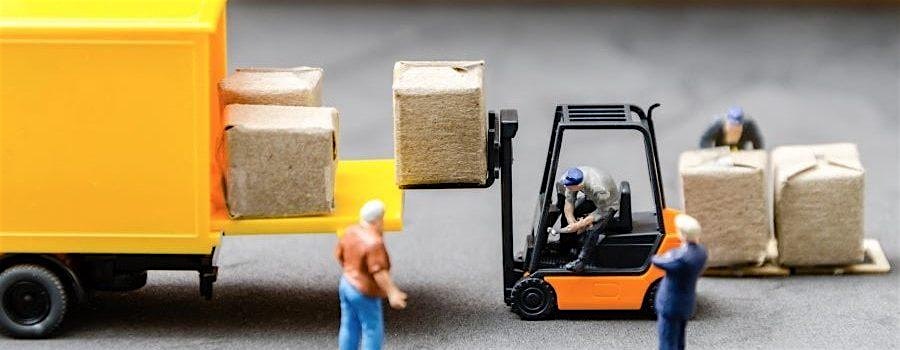
Tax Routines linked to ICMS and ISS Incidents in the Services of Cargo Transport, Storage and Other Logistic Operations 214/25 Current Rules and the changes brought by the Tax Reform approved by LC.
Objectives
Through a practical and objective approach, the course aims to present the current National Tax System and the main changes resulting from the approval of the Tax Reform, in order to enable professionals related to logistics to direct their studies and strategies permeated with the new national reality.
A Tax Reform approved by Complementary Law 214/25, its main objectives are to eliminate, at the same time, the excess of complexity, high administrative costs and fiscal “war” between the states and will oblige professionals from the various sectors of the company to update themselves on issues related to the subject, so that in this way, they can even generate competitive advantages over their competitors.
Changes in indirect taxes will directly impact on price formation, forcing the top management of companies (not only the tax/tax area and logistics) to a deep analysis of investment or divestment, strategic planning on new consumer markets, re-study of “malha logistics”, possibility of opening and/or closing branches, option to have own fleet and warehouse or operate with third parties.
Public Target
Managers and supervisors of logistics, tax, tax analysts, accountants, buyers, sellers, lawyers, as well as all those who are directly and indirectly linked to the tax and/or logistics department of industrial, commercial or service companies, or who want to join or improve their knowledge.
Programmatic Content
1 ^^^ Tax Reform & Challenges and Opportunities
- Tax Reform: Legislation, objectives, challenges and opportunities
- Five taxes on consumption (ICMS, IPI, ISS, PIS and COFINS) that will be replaced by two Value Added Taxes (VAT)
-
- CBS Goods and Services Contribution: Unify IPI, PIS and COFINS
- IBS (goods and Services Tax): Unify ICMS (state) and ISS (municipal)
- Reform Regulation and Effective Schedule
- Taxes (CBS and IBS) of federal, state and municipal VAT
- IPI, PIS and COFINS: Extinction from 01/01/2027
-
- IPI Only for operations with the Manaus Free Trade Zone
- How to calculate VAT on sales and purchasing operations
- Taxes due at destination
- The challenges of living with the current system and the new one in the next 7 years
2 ^^^ ICMS and ISS Overview
- ICMS and ISS ^ National rules and regulations in each state/municipality
- Basic Legislation
- Generator Fact and Collection Site of the tributes
- Limitations on the power to tax
- Calculation Base
- ICMS rates
-
- Internal operations
- Interstate operations
- Operations with imported content
- ISS rates (maximum and minimum)
- ICMS non-cumulativity and ISS Cumulativity
3 ^^^ ICMS/ISS ¡n Cargo Transport Service
- Route: importance in determining the type of transport and the tax incident
-
- Municipal (ISS Incidence)
- Intermunicipal and interstate (Incidence of ICMS)
- International (characterization for non-incidence of taxes)
- ICMS Generator Fact and the Solidarity Responsibility of the Carrier for the cargo transported
-
- Collection Site
- Carriers not registered in the State
- Calculation basis
-
- Service value
- Inclusions determined by legislation
- Toll: Does it enter or not in the calculation base?
- Aliquots
-
- Internal operations
- Inter-municipal and inter-state operations
- Operations with non-ICMS contributors
- Aliquot Differential
- CIF and FOB clauses
- Operational modalities
-
- Redispatch
- Subcontracting
- Transhipment
- Cross-Docking
- Intermodal and Multimodal
- Export shipping service
-
- Export concept
- Definition of State Fiscuses
- Systematic use of ICMS credits
-
- Graphical account
- Credit option granted
- Waiver of other credits
- ICMS credit in the redispatch operation
- Study the best option
4 ^^^ General Warehouse (Rules to be observed by the General Warehouse and the Depositor)
- Regularization under Federal Decree no. 1.102/1903 with the
-
- Trade Boards of States
- Federal Revenue Secretariat
- State Treasury Department
- Joint activity with other operations
-
- Provision of transport service
- Kit assembly
- Transit Point
- Branch Condominium
- Others
- Operations provided for in the Regulation (particularities in each operation)
-
- Formalities to be observed in the shipment of goods
- Formalities that must be observed in the Return of goods
- General Warehouse Return (physical or symbolic)
- Delivery by supplier directly to general warehouse
- Departure from the general warehouse to another establishment
- Transmission of ownership of goods remaining in the AG
- Goods Intended for Export
- Adoption of Special Regime for cases not provided for in the legislation
- Incidence hypothesis of ICMS
- Aliquots
- Calculation basis
- Responsibility for ICMS of interstate operation
-
- Tax and ICMS loading in the operations carried out by the general warehouse
- ICMS credit recovery
- ICMS refund paid in interstate operation
- Contractual Clause Defining the ICMS Refund by the Vessel to the General Warehouse
- The types of services offered in addition to (or alternative to) Storage
-
- Branch Opening in the Logistics Operator
- Closed Deposit (conditions and limitations)
- Logistics Operations “in house”
- CD in Incentivized Region
- Load Consolidation and Deconsolidation in concept “transit in point”
5 '' Tax Reform (Impacts on the Logistics of Industrial, Commercial and Service Providers)
- End of Schemes: Cumulative (all companies start operating under the Non-Cumulative regime)
-
- Full Cumulativity: What it is and what impact it has on the price of the product or service
-
- There are no limitations on the nature of the purchases (whether good or service)
- No requirement of “essentiality” or “inerence” for credit appropriation
- Credit sealing only for “Use or Personal Consumption” (what are these products?)
- Taxes will be calculated “por out” to replace the current system (inside)
-
- The new taxes (IBS and CBS) must be informed in the tax documents from 01/01/2026
- Credits conditional on payment (care with suppliers with debit from the tax authorities)
- Transition period to the end of the call “State Fiscal War”
-
- The State Legislation on Tax Benefits remains in force until 2032 (opportunities)
-
- Most common tax benefits today
- Importance of tax benefits for distribution logistics
- With the Tax Reform the definition of “Malhas Logistics” it will no longer be due to State Tax Benefits
-
- End of “Turismo Fiscal”: Routes defined according to productivity
Instructor
- Lawyer
- Post-graduated in tax law from PUC-Campinas
- Accountant
- More than 30 years of experience in the tax area of large organizations, including audit and consulting companies (PWC and KPMG); industries and commerce (ITW-Mapri, Novartis and Fareva) and Logistics (Logimasters, Dachser, Keepers and Intecom)
Important Information
The value includes the course, material and certificate in electronic media.
Mode: Online broadcasting (The course will be broadcast live, and students will be able to watch it through the computer with internet access. During classes, it will be possible to interact with the instructor, sending comments and clarifying doubts in real time.
This training can also be conducted in company in face-to-face or online format.
More Information about the Tax and Tax Logistics Course contact us by phone (11) 3230-2714 or access the link: https://bit.ly/412lXkD

 Português do Brasil
  English
  Español
  Deutsch
  香港中文
香港中文  Русский
  हिन्दी
  Français
  Italiano
  日本語
日本語  العربية
  繁體中文
繁體中文  বাংলা
বাংলা  Български
  Čeština
  Dansk
Dansk  Ελληνικά
  Suomi
Suomi  Hrvatski
  Magyar
  Bahasa Indonesia
  한국어
한국어  Lietuvių kalba
  Nederlands
  Norsk bokmål
  Polski
  Português de Angola
  Português
  Română
  Slovenčina
  Slovenščina
  Svenska
  ไทย
ไทย  Türkçe
  Українська
  Tiếng Việt
  简体中文
简体中文  Afrikaans
  Íslenska
  Luxembourgish
  Bosanski
  Հայերեն
  Shqip
Shqip  Kiswahili
  فارسی
فارسی  Српски језик
  اردو
اردو  Latviešu valoda
  Català
  Eesti
Eesti  Bahasa Melayu
  English (Australia)
  English (Canada)
  English (UK)
  English (New Zealand)
  English (South Africa)
  Cebuano
  Bashkir
  Acehnese
  Bhojpuri
  Français de Belgique
  ಕನ್ನಡ
ಕನ್ನಡ  Deutsch (Schweiz, Du)
  Deutsch (Österreich)
  كوردی
كوردی  עִבְרִית
  नेपाली
  Беларуская мова
  Quechua