Início Site

Ship From Store Nacional da Eu Delivero aims 4 million orders and delivery within 2 days

Eu Delivergo announces the launch of Ship From Store Nacional, a solution that expands its pioneering collection model in stores to connect physical stocks to any destination in Brazil, with deliveries that can be made in up to two days in the southeast region.The novelty reaches the market supported by a consolidated operation, with daily collections in more than 500 cities. The expectation is to move about 4 million orders in 2026, being able to represent up to 30% of the company's revenue in the period.

In practice, the modality allows orders placed in physical stores to be collected by Eu Delivero and, depending on the destination, forwarded to strategic partners responsible for the last mile, under centralized management of the company. The operation combines the capillarity of local collections with a qualified network of national distribution, ensuring standardization, traceability and SLA control throughout the journey. For local orders, the deadline is the same day, while deliveries in the southeast region are made in up to two days, expanding the reach of retailers without compromising the consumer experience.

The solution was structured to increase logistics efficiency and reduce costs compared to traditional shipping models. The optimization of routes and integration with strategic partners allow significant productivity gains, while maintaining the level of service. Daily collections directly in stores also accelerate the flow of orders, reducing downtime and increasing the predictability of deliveries, which is reflected in greater adherence to deadlines and better experience for the end customer.

At first, the collection operation is concentrated in the city of Sao Paulo, functioning as a basis for validation and scale gain. The strategy provides for gradual expansion to other regions of the country, with the objective of consolidating the system at the national level maintaining operational consistency and standard of service.

The operation is supported by proprietary technology of Eu Delivero, which connects all the links involved in the logistics journey and ensures real-time tracking, offering end-to-end visibility and greater control over each stage of delivery.“O Ship From Store Nacional is born as a natural evolution of our performance, allowing the retailer to use the stock of stores strategically to serve the entire Brazil, with speed, control and efficiency. Our role is to integrate this entire operation, ensuring standard of service and predictability, even in a complex logistics mesh”, says Norton Canali, commercial director of Eu Delivergo.

When the goal stops boosting and starts to lock results

*By Denise Joaquim Marques, a business consultant specialized in Sales and Marketing, focusing on high performance strategies, commercial leadership and market differentiation  

You know that the team can do more and your team knows that you know. Still, the month closes below expectations. When this is repeated, it becomes standard. And standard, in management, usually points to a poorly calibrated decision. 

There is a silent point where the goal ceases to guide and starts to block. It does not appear in a meeting, does not arrive as direct feedback, does not become an agenda. But it is there. It is when the professional, before a goal that he considers unattainable, internally recalibrates what he believes to be possible and starts working within this limit. A lower limit than the real potential, lower than the historical and often lower than what he himself has already delivered. 

It is not a lack of commitment: it is an adjustment of expectation. When the goal seems too far away, the effort loses meaning. The energy changes, the pace slows down, the ambition shrinks. Although the team remains active, they play believing in great results.  

At the other extreme, easy goals also charge a price. The results are achieved, but do not build evolution. The team complies, maintains the routine and follows without tension. Only when the scenario changes and requires more, lack repertoire. Lack speed and preparation to respond. The comfort zone, in this case, becomes delay. 

It is in this interval that leadership really makes a difference. Setting goals is not only designing number IO is context reading, it is understanding the moment of the market, the history of the team, the resources available and how much that goal mobilizes without locking. 

It takes the team off the automatic and does not break the belief that it is possible to arrive, even if it requires more than has been done so far, without ignoring reality. Certainly, there will be tension, but enough to generate action and not to paralyze. 

This will also require a change in the way you follow. It is not enough to look at the number at the end of the month. You need to observe what is being built along the way, what attitude, behavior, consistency, quality of execution. When the focus is only on the result, you lose the chance to adjust what actually produces this performance. 

High-performance teams are born of goals that make sense, not extreme goals that are understood, assumed, and pursued, that call for evolution, and yet are recognized as possible. 

The balance point in setting a goal is not in a fixed place, between the difficult and the easy. Forget it! He is in the ability to read along the way, is in realizing whenthe challenge turned block and when the facility turned accommodation. And especially be attentive to the purpose, the meaning, the hunger for achievement that connects the team to the achievement of the proposed goal, and make adjustments, before the team literally pull the plug. 

Your leaders speak for the company every day.But who is guiding what they say? 

By Marina Mosol and Mariana Hinkel, founders of NoAr Agency

In recent months, executives from companies such as Google, Microsoft and Meta have begun to publicly comment on topics such as artificial intelligence, regulation and market changes even before official announcements.In many cases, these are the lines that guide how the market interprets the next movements of these companies.

Data released by LinkedIn in early 2026 shows that executive-driven publications have grown more than 30% in global engagement over the past year, in many cases surpassing the reach of institutional profiles. In practice, this changes where reputation begins to be formed and requires a new level of PR organization.

In routine, this effect appears more clearly in three points:

1. Repeating with direction builds recognition

Executives don't have to talk about everything, but they do need to be consistent in what they choose to address.

When the same theme appears recurrently, even in different contexts, it begins to establish itself as part of the identity of that leadership. In PR, this approaches the thematic anchoring: the link between a name and the issues it sustains over time.

This recognition usually comes from some simple patterns:

  • the executive returns to the same theme in interviews, events and networks
  • it delves into the subject from different angles rather than just repeating opinion
  • connect this theme with real business decisions

A clear example appears in the consumer technology sector. Apple has for years been reinforcing discussions about privacy and data protection. This type of repetition makes the brand be remembered for the theme it supports, something that appears consistently in campaigns, positions and company decisions.

Over time, the name will load the theme together.

2. Not every speech goes through time, some stop at the moment

Much of what is said in everyday life disappears quickly. But some lines continue to appear, being cited or used as a basis for other analysis. What changes is not the subject is the form.

In PR, this appears in sustaining capacity: when a speech can remain relevant even outside the context in which it arose.

This is more evident when we look at different sectors. An executive who merely says that “the market is changing” tends to disappear in the flow of information. Already the one who explains what forces are behind this change, how it impacts the business and what decisions are being made creates content that continues to be resumed.

A point of reflection helps to understand this better: do the speeches of your leaders today help the public understand what is happening or just record that something is happening?

When there is an explanation, the content continues to circulate.

3. More voices do not mean more clarity, no alignment, the opposite happens

As different executives gain space, the perception of the brand is formed by the set of these lines.

In PR, this work appears in narrative alignment, ensuring that even with different voices, there is a clear direction being built.

In practice, this calls for some care:

  • define what themes each leadership should occupy
  • avoid overlap or contradiction between speeches
  • maintain a recognizable line of reasoning over time

Today, reputation is formed in what is said about it, including by those who represent it. And the more these statements accumulate, the more they influence the way the company is understood in the market.

BBM Logistics structure sustainability front and expands electric fleet

BBM Logistics has started structuring a front dedicated to sustainability and the construction of lower carbon logistics solutions.As part of this movement, the company joined The Climate Pledge, created an internal committee focused on the environmental agenda and has been expanding testing with electric vehicles in its urban and distribution operations.

The company joined the group of companies that are signatories to The Climate Pledge, a global commitment co-founded by Amazon and Global Optimism, which currently brings together more than 650 companies in 49 countries with the goal of neutralizing their carbon emissions by 2040 20 ten years before the deadline set by the Paris Agreement.

Commitments made by signatories include the periodic measurement and disclosure of greenhouse gas emissions, the implementation of decarbonisation strategies and the offsetting of residual emissions.

The initiative marks a new stage in the company's strategy, which is now consolidating a more structured sustainability agenda aligned with the transformations of the logistics sector and the growing demands of large shippers and e-commerce operations.

Internally, BBM has also created a committee focused on consolidating guidelines and initiatives related to sustainability and emission reduction in its operations.The proposal is to integrate different areas of the business in the gradual construction of more efficient and sustainable logistics solutions.

“We want to stop acting only reactively and start bringing structured sustainable solutions to the market.It is an important move to position BBM as a logistics operator prepared for the new demands of the” sector, says Luis Felipe Gunther Bastos, corporate director of operations at BBM Logistics.

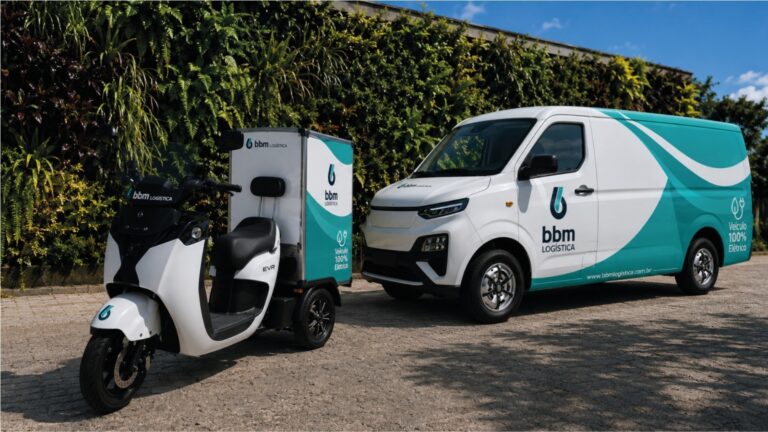
In practice, the company has already been advancing in the tests of electrification of the fleet. Recently, BBM acquired its eighth electric vehicle 'among vans, light trucks and a tricycle 'OD used mainly in urban operations and distribution deliveries.

According to Bastos, vehicles have a strategic role in the development of operational knowledge and in the evaluation of the technical and economic viability of models for different types of operation.

“The feasibility of operations with electric vehicles still requires collaborative construction with customers, regardless of the sector, whether industry, retail or marketplaces. The acquisition cost is still higher and infrastructure in Brazil remains limited, but it is a path without return and that needs to be developed”, he highlights.

With a national presence and operations in different logistics segments, BBM seeks to integrate sustainability into the development of more customized and efficient solutions for its customers, especially in urban operations, in which electrification already demonstrates greater operational viability.

“We are at the beginning of this journey, testing models and building solutions.Sustainability is already part of the company's value creation strategy”, concludes Bastos

Digitail Conference 2026 brings together retail and industry leaders to discuss the strategic use of AI and the new role of digital retail in Brazil

Digital transformation is no longer a trend to consolidate itself as a central business engine. It is in this scenario that Gouvea Experience promotes, on June 16, the Digitail Conference 2026 which will have as its theme “IA as a Business Ecosystem with Proven Results”. At the meeting, held at ESPM, executives from large companies in the country will discuss how artificial intelligence is redefining strategies, transforming consumption, changing operations, competitiveness and consumer relations.

With an intense agenda throughout the day, Digitail proposes a practical and applied vision of AI, addressing from internal productivity to new forms of engagement and conversion in the omnichannel environment.

Among the highlights of the program is the panel on the omniconsumer and how artificial intelligence has redefined expectations and shopping experiences. The discussion, mediated by Marcos Gouvea, Founder and General Director of Gouvea Ecosystem, will bring reflections on customization at scale, operational efficiency and the impacts of technological changes on the relationship between companies, consumers and employees.

Another central point will be the debate on proprietary data as a competitive differential, moderated by Eduardo Yamashita, CEO of Gouvea Intelligence, and participation of Carolina Lantaller, director of trade marketing at Unilever. Already the panel on “Agentic Commerce” will count on moderation by Roberto Wajnsztok, Managing Partner of Gouvea Consulting, and participation of Livia Masiero, Executive Director of E-commerce of Boticario Group and Sergio Ferraz, Director of E-commerce at Leroy Merlin.

The panel on competitiveness will bring together Alan Barsi, Vice President of Operational Excellence and Customer of MadeiraMadeira, and Eduardo Sa, Supply Chain Director of Natura, to discuss operational efficiency and value delivery. Following, Graciela Kumruian, CEO of Netshoes, will address the integration between the physical and the digital.

The panel on omnichannel marketing guided by artificial intelligence will feature Igor Cardoso, Head of Branding at Keetam and Jose Caporrino, Head of Creation at Chilli Beans.The discussion on the human factor and leadership will be led by Caio Nalini Director of People Management at Magazine Luiza, which will bring a perspective on organizational culture in times of accelerated transformation.

The program also includes case presentations, networking moments and a closing lecture, reinforcing the Digitail Conference's goal of connecting theory and practice, trends and concrete results.

Curated around applicability and value creation, Digitail 2026 is one of the main forums for discussing the future of retail and digital business in Brazil, bringing together decision-makers who are at the forefront of industry transformation.

About Gouvea Experience

Gouvea Experience is part of Gouvea Ecosystem and operates in the vertical of brand experiences, events and relationships with the main leaders of the retail sector in Brazil and abroad. Its international missions and events provide direct access to innovations and trends that shape global retail.

About Gouvea Ecosystem

Gouvea Ecosystem is an ecosystem of consulting, solutions and services that operates on all fronts of the consumer, retail and distribution sector. Founded in 1988, it is a reference in Brazil and worldwide for its strategic vision, practical performance and deep understanding of the sector. It is a member of the Ebeltoft Group, a global consortium of specialized retail consulting firms.

Digitail Conference 2026

Date: 16th June 2026

Schedule: from 9h to 18h30

Location: ESPM Auditorium ( Rua Doutor Alvaro Alvim, 123 Vila Mariana

Sao Paulo

Information & registration:

https://www.sympla.com.br/evento/digitail-conference-2026/3302574

Offshore hoisting training: why safety needs to be increased

In offshore operations, cargo handling is among the activities with the greatest potential for risk. Data from the International Association of Oil & Gas Producers indicate that incidents related to lifting operations remain among the main causes of serious accidents in the oil and gas industry, often associated with human failures, inadequate communication and incorrect reading of operating conditions.  

Analysis of international organizations indicates that a relevant portion of these events occur even in technically structured environments, which shifts the focus of the discussion to the quality of team preparation. 

In Brazil, although there is no specific consolidated statistic for cargo accidents in port environments, the different available cut-outs point to the same risk vector. Data from the Public Ministry of Labor, in partnership with the International Labor Organization, indicate that the transport, storage and mail sector registered more than 40 thousand work accidents in 2023, with a strong incidence in activities related to cargo movement.  

Recent reports by the National Agency for Waterway Transport, published between 2022 and 2023, also point out failures in lifting, mooring and handling operations as recurrent occurrences in safety audits in organized ports. Studies by the Jorge Duprat Figueiredo Foundation for Safety and Occupational Medicine, such as the 2021 technical survey on accidents in logistics operations, reinforce that events involving cargo drop, crushing and failures in lifting equipment are among the most frequent mechanisms of serious accidents.  

Because of this, operators and service providers have made a deeper review of their training models. The training is no longer a one-off event, focused on certification or compliance with standards, and has been treated as a continuous process, directly connected to the reality of the operation.  

In offshore environments, where variables such as wind, unit movement, visibility and interaction between teams change rapidly, the ability to interpret context and make decisions under pressure has become as relevant as the technical mastery of equipment. 

Impact of behaviour and communication 

Cognitive errors, such as overconfidence, confirmation bias and situational communication failures are present in a relevant portion of hoisting accidents. Because of this, training began to incorporate elements of behavior and perception, in addition to bringing different functions of the organization to the context.  

A misinterpreted command, a delay in response or a misreading of signaling can trigger a chain of events with relevant impact. Therefore, specialist companies have incorporated the simulation of interactions that occur in the day-to-day operations, reflecting the complexity of the offshore environment.  

Another important axis is the use of operational data to feed back training. More structured companies have integrated records of near accidents, operational deviations and critical events to training programs. Instead of working with generic examples, the exercises begin to reflect real situations experienced by the operation itself. This approach approximates training practice and reduces the distance between what is taught and what actually happens in the field. 

In addition, the systematic analysis of these data allows identifying patterns that would hardly be perceived in isolation. Frequency of failures in certain types of operation, recurrence of errors in specific interfaces between teams or inconsistencies in procedures become inputs for continuous review of training content. Learning is no longer reactive and becomes structured. 

This movement has a direct impact on the chain of command within the operation. When the team is trained based on real events, the perception of risk is calibrated more precisely. Operators who have already simulated the consequences of a communication failure during a hoisting in rough seas react differently in the same situation in the real environment. The memory built in the training starts to act as a decision reference, reducing the response time at times when stopping the operation is the safest choice. 

Simulation and practical training: where the method meets the real environment 

The offshore hoisting training is not limited to the behavioral dimension. It needs to include, with equal depth, the technical knowledge about the equipment that makes up the lifting system, the rules governing its specification and the criteria that determine when a component should be removed from operation. 

Steel cables, slings, shackles, straps and hoisting accessories work within precise technical parameters. The safe workload of each component is defined from the specific application, and ignoring this sizing, either by ignorance or by operating pressure, is a direct path to failures that visual inspection cannot predict. Standards such as ABNT NBR ISO 4309, which establishes criteria for the disposal of steel cables in lifting equipment, and the NBR 13541 and NBR 15637 families and their references, applicable to slings and lifting belts, provide the technical reference that needs to be in this repertoire of any professional activity. 

Periodic inspection of lifting elements is, in this context, an extension of training. Professionals trained to identify signs of abrasive wear, flexural fatigue, localized corrosion and structural deformations are able to act before the problem becomes an event. Incidents with loads on offshore platforms generate downtime, equipment damage, maintenance costs and, in severe cases, removals and irreversible consequences for teams. 

By Fernando Fuertes, Eng.o and New Business Developer at Acro Cabos.

Finally, the path that the most mature organizations in the sector have been following is to integrate behavior, operational data, practical simulation and technical knowledge of the equipment in a cohesive and continuous program. When this set works in an articulated way, training is no longer a requirement to be fulfilled and becomes the basis on which the operation is sustained, even when the sea does not collaborate. 

J&T Express steps up brand strategy in Brazil to expand local customer base

J&T Express 2 GLOBAL logistics company specializing in express deliveries for e-commerce, listed on the Hong Kong Stock Exchange IO has stepped up its communication strategy in Brazil to increase brand visibility and expand local customer base.

The initiative, which is part of a broader expansion plan in the country, involves increasing the presence in industry events, campaigns with influencers, brand activations on key dates for retail, boosting social networks, as well as strengthening public relations actions and relationship with the press.

In this way, the company seeks to popularize the brand and reach from the microentrepreneur and the small shopkeeper, who sell online on a smaller scale, to the medium and large retailer, who dispatch thousands of orders per day.

“After a hiatus in 2025, focused on expanding and optimizing the delivery network, infrastructure and operation, we resumed investments in marketing and communication to reach the public that does not yet know us. This year, with an intense agenda of events and actions with influencers, press and end customer, we hope to popularize the brand and make J&T Express the logistics company most remembered by Brazilians, as it already happens in southeast Asia, where we are leaders”, says Boby Wang, director of Network Management at J&T Express in Brazil.

The company has already sponsored in 2026 VTEX Day and throughout the year will participate in several other events in the sector, such as ExpoEcomm, MAP Experience and the E-Commerce Forum Brazil. In addition, J&T will promote brand activations on important dates for the Brazilian, such as, for example, actions during the games of the Selection in the World Cup.“After a hiatus, in 2025, focused on the expansion and optimization of the delivery network, infrastructure and operation, we resume investments in marketing and communication to reach the public that does not yet know us, Brazil and express, with a company.

The company has already sponsored VTEX Day in 2026 and throughout the year will participate in several other events in the sector, such as ExpoEcomm, MAP Experience and the E-Commerce Brazil Forum. In addition, J&T will promote brand activations on important dates for the Brazilian, such as actions during the national team's games in the World Cup.

Samsung and Google reveal first preview of new smart glasses

Samsung Electronics and Google unveil new smart glasses1, presenting for the first time, during Google I/O 2026, two premium models created in partnership with the Gentle Monster and Warby Parker brands. Designed to work as a complementary device to the smartphone, the new glasses make it possible to access voice command assistance and connect to the smartphone in an integrated way, all in a format already familiar to users.

Developed in partnership with eyewear brands, the smart glasses combine advanced AI features with comfort and style, uniting Samsung's leadership in hardware engineering and Google's AI technology with a premium eyewear design.Each brand brings its own approach to the device.Recognized for its track record in eyewear fashion, Gentle Monster presents models with bold and sophisticated aesthetics, while Warby Parker bets on refined and timeless designs.

Created to understand the world alongside users in real time, the new smart glasses offer support for everyday life while keeping their hands free and head up. Users can receive navigation assistance when asking, with the voice, for Gemini, receive personalized suggestions, such as a nearby coffee shop on the path of the walk, or even make requests for withdrawal. It is also possible to receive summaries of important notifications and add appointments to the calendar. Among the additional features are real-time translations with audio synchronized to the voice of the interlocutor, in addition to the ability to translate texts into menus or boards within the user's field of vision. In fluid integration with the Galaxy, the device needs to capture photos and the practicality of the device with the device to capture the practicality of the user's pocket.

Tray expands AI offering for SMEs and automates e-commerce operation across multiple channels 

Tray, the LWSA e-commerce platform, announced the expansion of its offer of Artificial Intelligence solutions aimed at small and medium-sized retailers. Integrated natively to the platform panel, the new features automate stages of the online operation (of the creation of stores and ads for publication in marketplaces & seek to increase the efficiency, scalability and sales capacity of entrepreneurs in different digital channels.

With the new offer, the company expands its strategy to accelerate businesses of all sizes, especially entrepreneurs in early operation, who now have more autonomy to manage the business and increase their chances of growth in e-commerce.

According to the company, the new features allow SMEs to gain productivity to operate simultaneously in their own stores, marketplaces and other digital channels. The e-commerce segment of LWSA brings together more than 211 thousand retailers, who moved R$ 20.3 billion in sales in 1Q26, considering the GMV transited by the ecosystem, including own stores, marketplaces, ERP and integrators.

Native and affordable AI: the advancement of technological democratization

Tray is betting on a more integrated and simplified application of AI for e-commerce platforms. Among the main differentials is the native integration of the technology to the platform's administrative panel.The new features were developed for direct use by the retailer, regardless of previous experience, expanding access to technology in the context of SMEs.

“As partners in the entrepreneur's journey, we understood that when investing in AI, we needed to bring solutions that really impacted the operation, such as pricing and standardization of ads (A challenge for those who sell on multiple channels at the same time, since each platform has different requirements of image and description. By bringing AI to the center of the business, we helped this entrepreneur gain scale and more resilience in the first year of the E-commerce”, says Thiago Mazetto, general director of Tray.

Among the highlights is the Wizard with AI, an assistant that allows you to create a complete virtual store in minutes, automatically configuring categories, SEO, visual identity and institutional pages. Intelligent correction of ads 1 initially for Amazon OAS, automated publishing in marketplaces and creation of landing pages, categories and institutional content via IA are other features.

While traditional automation performs predefined tasks, new AI-based capabilities now analyze data in real time and suggest actions to optimize the operation, bringing e-commerce closer to a more autonomous model.

Key benefits include time savings, scalability gains and increased business intelligence, with easy access to information on consumer behavior and sales opportunities built into the operation.

LWSA has AI investments across the ecosystem

Tray's initiatives integrate the strategy of adopting Artificial Intelligence throughout the group's ecosystem, which consolidated its core business last year in offering technological solutions for e-commerce. AI is already part of the operations of units such as Bling, aimed at the management of retailers. Octadesk has Woz, a solution that automates much of the customer service interactions.

According to Rafael Chamas, CEO of LWSA, AI is integrated into the operation infrastructure.“A LWSA is in the operational infrastructure of Brazilian e-commerce, with structured data, integrated critical workflows, connected operational domains, governance and execution capacity. This is exactly the layer on which AI agents need to operate to function. We are not just an interface; we are the base that enables a reliable operation”, he highlights.

GPTW Retail 2025 survey highlights companies that have outperformed Brazilian GDP growth

Great Place To Work (GPTW), a global consulting reference in organizational culture and healthy work environments, has just released the 12th edition of the Ranking of the Best Companies to Work for 2025. The study was attended by 294 companies, impacting more than 555 thousand employees throughout the country.

All in all, and, 60 Organizations they have been recognized for their consistent people management practices.Among the awardees, they are 10 Small businesses20 Medium sized20 Large size and 10 classified as super large.

The winning companies are distributed in 16 Brazilian states. Sao Paulo leads with 15 award-winning companiess, followed by Parana and Rio Grande do Sul, with seven eachSaint Catherine appears with six organizations recognized, while Ceara and Federal District count with five each.Mato Grosso and Minas Gerais somam three companies each awarded, and the Rio de Janeiro records two. already Alagoas, Amazonas, Goias, Maranhao, Pernambuco, Rondonia and Roraima have an award-winning company each.

According to the survey, the Best Companies to Work for in Retail showed growth of 16% in revenue in 2025, surpassing the advance of 3.4% of the Brazilian Gross Domestic Product (GDP) in the same period. 

Age profile

The analysis revealed specific changes in the age distribution of employees in 2025 45 And 54 years they came to represent 12% of the total, with light change of one percentage point, while the share of those aged 55 and over grew by 2% over the previous year 35 To 44 years remained stable, concentrating 24% of employees. On the other hand, the group of 26 To 34 years, which was majority in 2023 with 33%, presented four percentage point decline, reaching 29% in 2025. Already professionals with up to 25 years they have remained the largest group among the award-winning companies in the industry, representing 30% of the total, even with an oscillation of one percentage point compared to the previous year.

Home time

The length of stay in companies reinforces the high turnover characteristic of the retail sector, which leads among the segments with the highest concentration of professionals with little time home. In 2025, the, 49% of employees had up to two years of company, an increase of 5 percentage points compared to 2024. The participation of professionals with two to five years the company has also grown, going from 22% to 24%. The group with six to ten years recorded slight advance, reaching 14%.

On the other hand, there was a reduction in the share of employees with longer time at home: those with 11 To 15 years they fell nine percentage points compared to the previous year.And professionals with long trajectories remain in the minority, with only 3% focusing on tracks from 16 to 20 years or over 20 years of company.

Profile by gender 

In this cut, the research shows that the retail companies recognized in the GPTW ranking stand out for greater female representation, with 53% of women in their frames. This percentage places retail among the three sectoral rankings with the highest presence of women. Still, the index is two percentage points below that recorded in 2023. 

Leadership

The analysis of the relationship between gender and management levels reveals advances in female participation in 2025 high leadership, women passed occupying 28% of the positions, one five percentage point growth compared to the 23% registered in 2023.

Na middle leadership, there was slight increase by one percentage point, returning to the level of 2023, with 43%. Already in the other leadership positions, the advance was more significant, with female participation reaching 49% in 2025.

The data indicate that, although the companies awarded in the GPTW Retail 2025 ranking stand out compared to most sectoral lists for the greater female presence in leadership positions, there are still challenges to be overcome to strengthen gender diversity at all levels of management.

Innovation Index (IVR)

In 2025, 42% of the award-winning companies operate in the functional stage of innovation, which, advance of four percentage points in relation to the previous ranking and 12% with respect to 2023. However, the study also identified a reduction of three percentage points (14%) compared to the last ranking, which, of companies in the accelerated stages of innovation.The research reinforces that the capacity for adaptation and innovation has been strengthening among the awarded companies, despite the organizations in friction stage still represent the majority with 44 Percentage points. 

Permanence factors

The research identified that a remuneration presented five-point growth percentages compared to 2024 and seven percentage points compared to 2023 quality of life it also made progress, with four percentage point increase from 2024 to 2025, while the stability has grown two points percentages in the same period.

The alignment of values remained stable, with 10% growth opportunity, although it remains the main reason for permanence among the employees of the awarded companies, cited by 36% of respondents, it decreased by 11 percentage points regarding 2024.

Check the ranking at this link:

https://conteudo.gptw.com.br/estudo-ranking-varejo-2025