


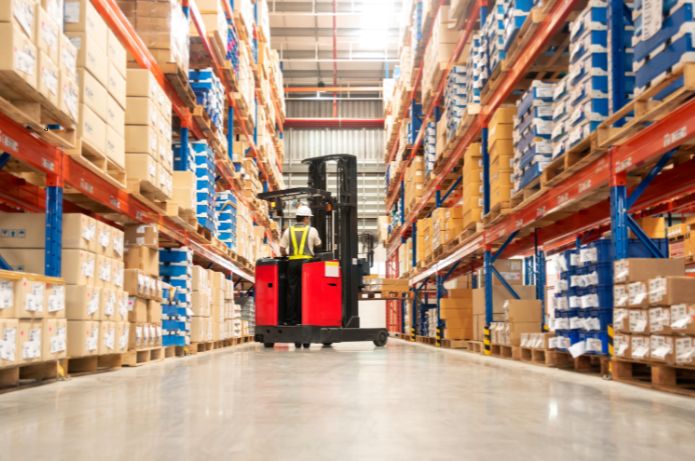
The advance of e-commerce and the reconfiguration of supply chains have driven a significant transformation in the Brazilian logistics infrastructure.In recent years, the country has registered a consistent growth in the number of logistics warehouses, reflecting the need for companies to expand their storage and distribution capacity to meet an increasingly demanding consumer.
According to Newmark data, the stock of high-end logistics condominiums in Brazil exceeded 30 million square meters in 2024 alone, especially in regions such as the Southeast and Northeast.
In 2025, the market registered approximately 4.8 million m² of leased area, with net absorption close to 3.6 million m², according to Colliers, demonstrating the strength of demand for logistics spaces in the country. This level of vacancy indicates a favorable market for owners, with limited supply of modern logistics assets in strategic locations.
This movement, however, is directly linked to the expansion of e-commerce. According to the Brazilian Electronic Commerce Association (ABComm), the sector continues to grow and requires more robust logistics structures, capable of ensuring agility in the separation, processing and sending of orders. The E-Consumer 2026 study, conducted by Nuvemshop in partnership with Opinion Box, points out that the segment should bill about R$ 260 billion this year.
With more space available, a new challenge also arises: making these operations more efficient. The simple physical expansion is no longer enough to ensure competitiveness. Companies need to invest in inventory organization, automation and, especially, in solutions that increase productivity in internal handling of loads.
“We are seeing an important change in the role of logistics warehouses. They are no longer just storage spaces and have come to function as strategic distribution centers, where operational efficiency is decisive for business performance. With this, cargo handling gains prominence, as it directly impacts the processing time of orders and the service capacity of the” companies, says Humberto Mello, director of Tria Forklift.
The growing demand for efficiency has also driven the modernization of the equipment used within these spaces. More technological forklifts, integrated systems and solutions aimed at flow optimization become important allies to deal with larger volumes and shorter deadlines.In addition, the search for reduced operating costs and greater predictability reinforces the importance of a more strategic management of the fleet and the logistics operation as a whole.
“The trend is that the growth of logistics warehouses will continue in the coming years, accompanied by an increase in the adoption of technology and operational intelligence.We live today a highly competitive scenario, and companies that can integrate infrastructure, processes and efficient management of cargo handling will be more able to meet market demands and stand out in an increasingly dynamic environment”, says Mello.


 Português do Brasil
  English
  Español
  Deutsch
  香港中文
香港中文  Русский
  हिन्दी
  Français
  Italiano
  日本語
日本語  العربية
  繁體中文
繁體中文  বাংলা
বাংলা  Български
  Čeština
  Dansk
Dansk  Ελληνικά
  Suomi
Suomi  Hrvatski
  Magyar
  Bahasa Indonesia
  한국어
한국어  Lietuvių kalba
  Nederlands
  Norsk bokmål
  Polski
  Português de Angola
  Português
  Română
  Slovenčina
  Slovenščina
  Svenska
  ไทย
ไทย  Türkçe
  Українська
  Tiếng Việt
  简体中文
简体中文  Afrikaans
  Íslenska
  Luxembourgish
  Bosanski
  Հայերեն
  Shqip
Shqip  Kiswahili
  فارسی
فارسی  Српски језик
  اردو
اردو  Latviešu valoda
  Català
  Eesti
Eesti  Bahasa Melayu
  English (Australia)
  English (Canada)
  English (UK)
  English (New Zealand)
  English (South Africa)
  Cebuano
  Bashkir
  Acehnese
  Bhojpuri
  Français de Belgique
  ಕನ್ನಡ
ಕನ್ನಡ  Deutsch (Schweiz, Du)
  Deutsch (Österreich)
  كوردی
كوردی  עִבְרִית
  नेपाली
  Беларуская мова
  Quechua