


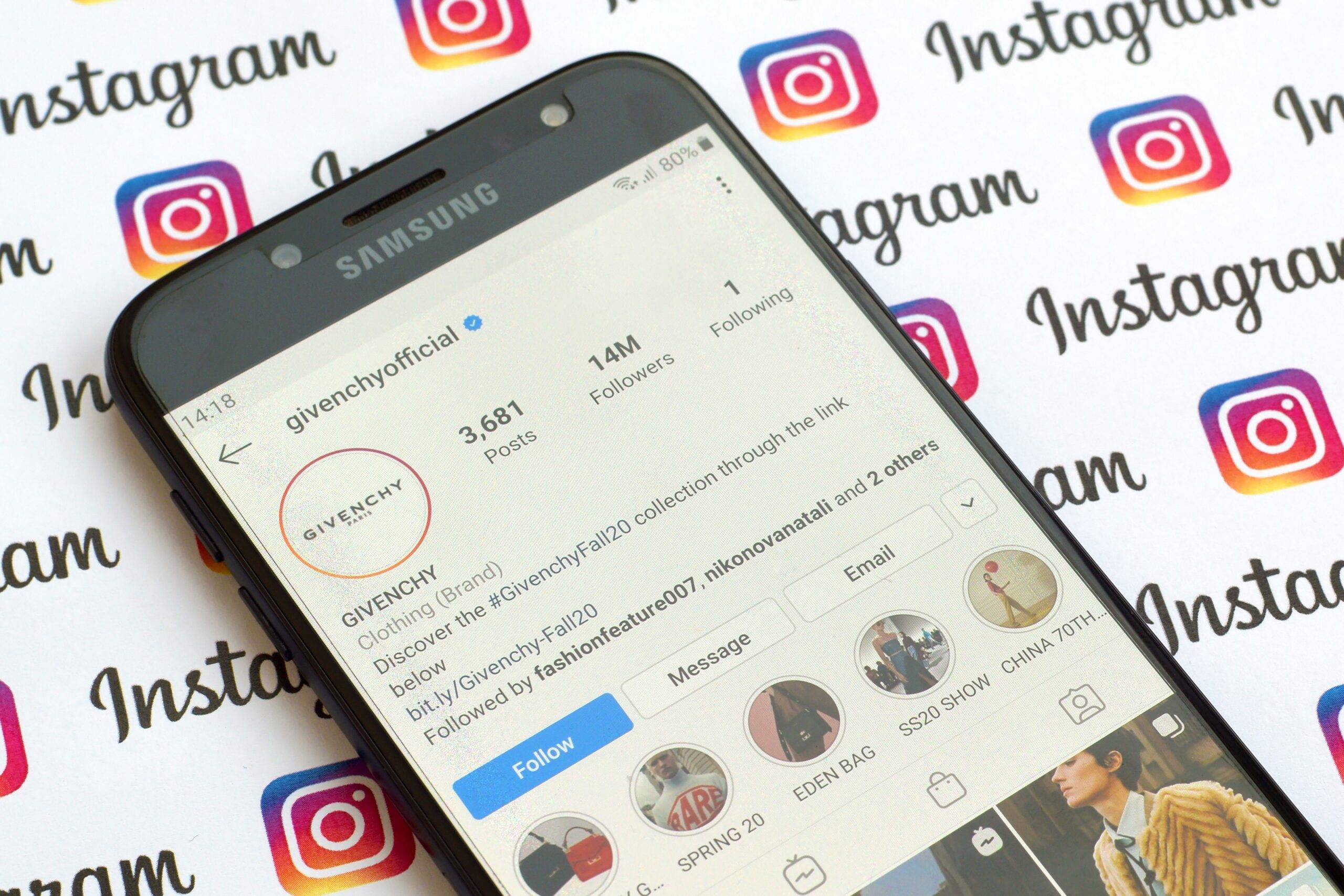
Instagram has returned to the center of discussions about authenticity and digital security after confirming in 2026 a new mass removal of fake, inactive and suspicious accounts from the platform.The move has caused sudden drops in the number of followers of celebrities, influencers and brands, reigniting debates about artificial audience, digital credibility and the advancement of social media scams.
Meta itself confirmed that the action is part of an ongoing process to combat spam, bots, fraudulent accounts and profiles that violate the platform's policies. According to data released by the company, approximately 4% of the more than 3 billion monthly active users are fake accounts, equivalent to more than 140 million profiles on a global scale.

The scale of the problem has become even more evident in recent years.In 2025 alone, Meta claimed to have removed almost 10 million accounts posing as content creators, as well as almost 12 million accounts linked to scam operations on its platforms.In another operation carried out in the same year, the company reported having taken down about 8 million fraudulent accounts on Facebook and Instagram, as well as 21 billion fake pages and more than 6 million WhatsApp accounts related to digital scams.
For Melissa Pio, CEO of TEC4U, the new wave of removals goes beyond a simple “cleaning” of the platform and reveals an important transformation in the digital environment.
“Social networks have spent years valuing volume and reach above anything else. Now, the platforms themselves are showing that much of this audience was not necessarily real or qualified. This completely changes the way brands, creators and companies need to see digital presence”, he says.
In 2014, Instagram had already promoted one of the largest removals of fake accounts in its history. At the time, celebrities lost millions of followers suddenly. The official Instagram profile even registered a drop of about 18 million followers, while names like Neymar and Cristiano Ronaldo also had significant losses. According to the social network itself, the profiles removed were automated accounts, spam or users who violated the terms of use.
Since then, Meta says it has been improving its automatic detection mechanisms and progressively reducing the volume of fake accounts found on its platforms. Still, the CEO points out that the digital market has become accustomed to using superficial metrics as a parameter of relevance, influence and even commercial value.
“Many companies still invest in campaigns looking only at the number of followers, without assessing audience quality, real engagement rate or behavior of that community. The problem is that inflated metrics create an artificial perception of authority and” impact, explains Melissa.
The financial impact is also significant, especially for brands working with creators, paid media and digital influence actions.
“When a company invests in profiles with artificial audience, it may be paying for reach that simply does not exist in practice. Often, engagement seems high, but does not convert because part of that base is formed by bots, inactive accounts or users without any real connection to the” brand, he says.
In addition to the commercial issue, the advancement of fake profiles and automated accounts has also come to represent a growing digital security problem.In recent years, criminals have used social networks to apply financial scams, clone company profiles, create fake stores and deceive consumers using visual identity and communication similar to those of legitimate brands.
The figures released by Meta show the size of this scenario. In 2024, the company removed 63 thousand Instagram profiles involved in sextortion scams. The operation also knocked out 7,200 assets on Facebook, including 1,300 accounts, 200 pages and 5,700 groups associated with fraud. Already in 2025, the company removed 135 thousand accounts linked to child exploitation and identified another 500 thousand accounts related to the same group, eliminating all of them from the platform.
For Melissa, the growth of these operations demonstrates how social networks have become a strategic environment for digital crime.
“The user has learned to distrust suspicious emails, but there is still a very strong perception of security on social networks. The scammers quickly understood this and began to exploit precisely the trust that people place in visually professional and apparently legitimate profiles”, he says.
The expert warns that the problem directly affects e-commerce companies and businesses that use social networks as the main channel of relationship and sales.
“Today, a fake profile can copy visual identity, campaigns, language and even automated service to appear legitimate.Often, the consumer only notices the scam after the purchase or the leak of” data, he explains.
Meta also reported that about 85% of banned ad accounts never made money on the platform and that almost 70% of these accounts are removed within a week of creation.
For TEC4U, the trend is for platforms to increasingly harden their authentication, verification and moderation mechanisms, pushing companies and content creators to build more organic and transparent communities.
“Platforms are moving towards a scenario in which authenticity is no longer differential and becomes a basic requirement. Those who have built a real relationship with their audience tend to suffer less impact. Already models supported by artificial numbers are increasingly vulnerable to this type of” exposure, concludes Melissa Pio.

 Português do Brasil
  English
  Español
  Deutsch
  香港中文
香港中文  Русский
  हिन्दी
  Français
  Italiano
  日本語
日本語  العربية
  繁體中文
繁體中文  বাংলা
বাংলা  Български
  Čeština
  Dansk
Dansk  Ελληνικά
  Suomi
Suomi  Hrvatski
  Magyar
  Bahasa Indonesia
  한국어
한국어  Lietuvių kalba
  Nederlands
  Norsk bokmål
  Polski
  Português de Angola
  Português
  Română
  Slovenčina
  Slovenščina
  Svenska
  ไทย
ไทย  Türkçe
  Українська
  Tiếng Việt
  简体中文
简体中文  Afrikaans
  Íslenska
  Luxembourgish
  Bosanski
  Հայերեն
  Shqip
Shqip  Kiswahili
  فارسی
فارسی  Српски језик
  اردو
اردو  Latviešu valoda
  Català
  Eesti
Eesti  Bahasa Melayu
  English (Australia)
  English (Canada)
  English (UK)
  English (New Zealand)
  English (South Africa)
  Cebuano
  Acehnese
  Bhojpuri
  Français de Belgique
  ಕನ್ನಡ
ಕನ್ನಡ  Deutsch (Schweiz, Du)
  Deutsch (Österreich)
  كوردی
كوردی  नेपाली
  Беларуская мова
  Quechua
  རྫོང་ཁ
  Español de Costa Rica
  Español de Argentina
  Español de Chile
  Español de Colombia
  Español de República Dominicana
  Español de Ecuador
  Español de Guatemala
  Español de México
  Español de Perú
  Español de Puerto Rico
  Español de Uruguay
  Español de Venezuela
  Français du Canada
  Hausa
Hausa  Frysk
Frysk  Igbo
Igbo  ភាសាខ្មែរ
  Konkani
  Irish
Irish  Gàidhlig
  O‘zbekcha
  ພາສາລາວ
  Friulian
  Galego
  Haitian Creole
  Xhosa
Xhosa  هزاره گی
  گؤنئی آذربایجان
  ਪੰਜਾਬੀ
  తెలుగు
  தமிழ்
தமிழ்  Кыргызча