


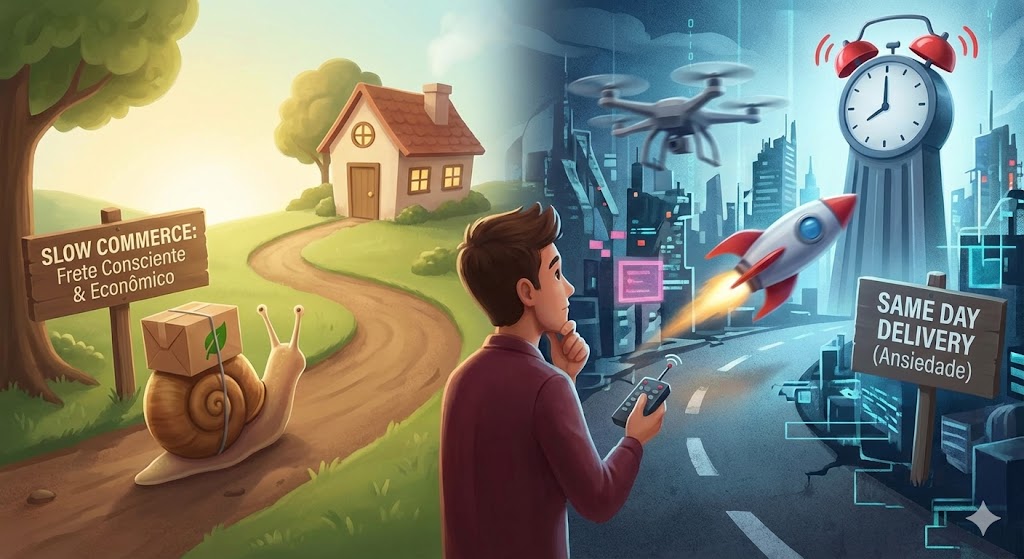
Slow Commerce is approachthat prioritizes sustainability, cost efficiency, and conscious planning over immediate delivery speed.
Emerging as an antithesis to Q-Commerce (Quick Commerce) and the standardization of Same Day Delivery, Slow Commerce encourages consumers to exchange instant gratification for tangible benefits (lower prices, exclusive products) and intangible benefits (reduced carbon footprint), accepting delivery times that can vary from a few days to several weeks.
The Context: The Hangover of Immediate Delivery

The last decade of e-commerce has been defined by the "last mile race," where retail giants accustomed consumers to receiving products within hours. While convenient, this model generates extremely high operational costs and a severe environmental impact (empty trucks running to meet deadlines, excessive use of packaging, and air transport).
Slow Commerce is gaining momentum as consumers develop a "climate awareness" and companies seek to recover profit margins eroded by express shipping.
How it Works in Practice
The model manifests itself in two main ways:
- Green Shipping: At checkout, the store offers a "No-Rush Shipping" option. The customer agrees to receive the product in 5 or 7 days instead of 1, and in return receives free shipping, a discount, or loyalty points. This allows the carrier to consolidate loads and optimize routes, fully filling the trucks before dispatching them.
- Production on Demand (Pre-Order): Fashion and design brands sell the product before manufacturing it. The customer buys knowing that the item will be produced and delivered within 30 days. This eliminates dead stock and waste of raw materials.
Pillars of Slow Commerce
- Sustainability: Slowing down allows for the use of less polluting modes of transport (trains or ships instead of planes) and optimized routes, drastically reducing CO2 emissions per package delivered.
- Economics: Urgency is expensive. By removing the pressure of time, logistics costs decrease, and these savings can be passed on to the final price of the product.
- Mental Health and Conscious Consumption: This model combats impulse buying. By accepting the wait, the consumer engages in deliberate planning, reintroducing the feeling of anticipation and appreciation of the purchase, as opposed to the anxiety of unrestrained consumption.
Comparison: Fast Commerce vs. Slow Commerce
| Feature | Fast / Q-Commerce | Slow Commerce |
| Priority | Speed (Minutes/Hours) | Efficiency and Sustainability |
| Logistics Cost | High (Premium) | Low (Economical) |
| Environmental Impact | High (Inefficient routes, many trips) | Low (Consolidated loads) |
| Purchase Type | Impulse / Immediate Need | Planned / Desired |
| Stock | Ready for Delivery (Dark Stores) | On Demand or Just-in-Time |
| Feeling | Instant Gratification | Expectation and Appreciation |
Benefits for Brands
For retailers, Slow Commerce is a powerful tool for managing margins and inventory.
- Fewer Returns: Studies indicate that purchases made with longer payment terms (less impulsive) have lower return rates.
- Predictability: The pre-sale model generates cash flow even before the cost of production is incurred.
- Branding: Positions the brand as environmentally responsible, attracting the growing audience that practices "green consumption".