


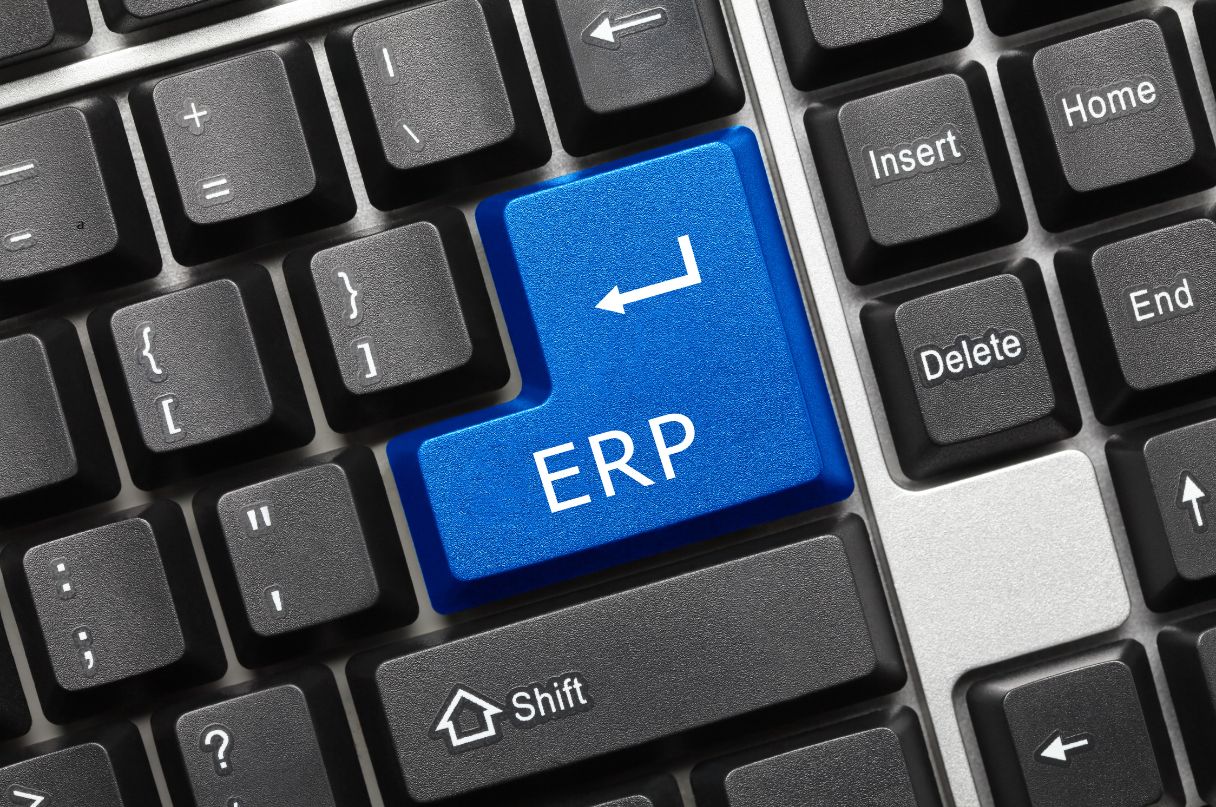
For many years, ERP, an integrated management software system that centralizes data and automates processes in various sectors, was seen by retail as a rearguard system, which was essential but invisible. It organized inventory, tax, purchasing and financial, functioning as the gear that kept the operation standing. But the consumer has changed, competitive dynamics accelerated and predictability disappeared. Today, operating well is not enough, it is necessary to anticipate. This is where the integration of ERP with artificial intelligence is no longer a trend and becomes a real competitive differential.
Brazilian retail lives with tight margins, high tax complexity, inventory disruption, excess of stopped products, unpredictable seasonality and a hyperconnected consumer who compares price in seconds. In this context, decisions based only on history and intuition no longer support growth. When ERP starts to incorporate AI in a structured way and not as an isolated module, it stops just recording what happened and begins to indicate what is likely to happen.
Predictive management in practice: inventory, price and cash under new logic
One of the most evident impacts is in inventory management, where the combination of historical data, sales behavior by region, seasonality, climate, promotional calendar and even macroeconomic variables allows more accurate forecasts. This means less disruption and less capital stopped. For the retailer, it is not just about operational efficiency, but financial health, considering that each stranded product represents fixed money and each break represents lost sale and frustrated customer.
Another crucial point is smart pricing, which is possible through the integration of AI in ERP, which allows analyzing elasticity of demand, turnover, competition and margin to suggest dynamic price adjustments. It is not simply lowering value to sell more, but finding the balance point between competitiveness and profitability. In a price sensitive market like the Brazilian, this ability to calibrate strategy in near real time transforms results.
The commercial area is also deeply impacted, and from the analysis of purchase behavior, frequency, average ticket and product mix, the system begins to identify patterns and suggest personalized actions, either for segmented campaigns, or for reorganization of layout and products. ERP ceases to be an administrative tool and becomes a business intelligence engine.
There is also the strategic gain in financial management, where AI applied to ERP data can design cash flow more accurately, simulate scenarios and anticipate risks. Instead of reacting to a liquidity problem, the manager starts to visualize trends and act preventively.In an environment of economic instability, this ability to simulate and predict reduces vulnerabilities.
But perhaps the greatest impact is cultural, since when information is no longer fragmented and becomes integrated, decision-making democratizes. The store manager, the inventory manager and the board start operating with the same database, with consistent predictive analysis. This reduces internal conflicts, eliminates decisions based on isolated perceptions and creates a data-driven culture, something that I still perceive to be a challenge in national retail.
Technology as a strategic ally, not a human substitute
Integrating ERP with AI does not mean replacing people with algorithms, it means enhancing the human ability to decide better. Artificial intelligence identifies patterns that escape the human eye, but the strategy continues to be built by people who know the market, the customer and the business culture.
Retail is experiencing a silent transition: from reactive management to predictive management, where those who continue to use ERP only as a transactional system risk being left behind.
At the end of the day, it is not about technology for technology, but about margin, competitiveness and business sustainability. The integration between ERP and AI is not a futuristic luxury, it is a concrete response to the complexity of modern retail. In practice, it redefines the way the retailer sees the business itself, not only as a set of stores, but as a data ecosystem capable of anticipating the next market movement.
Alex is commercial director of Data System, with more than 20 years of experience in footwear and clothing retail. With training by Veris 2 IBTA, he built his career in the company through the technical, support and implementation areas until he assumed commercial leadership and business expansion, always focusing on transforming the management of retailers through technology.


 Português do Brasil
  English
  Español
  Deutsch
  香港中文
香港中文  Русский
  हिन्दी
  Français
  Italiano
  日本語
日本語  العربية
  繁體中文
繁體中文  বাংলা
বাংলা  Български
  Čeština
  Dansk
Dansk  Ελληνικά
  Suomi
Suomi  Hrvatski
  Magyar
  Bahasa Indonesia
  한국어
한국어  Lietuvių kalba
  Nederlands
  Norsk bokmål
  Polski
  Português de Angola
  Português
  Română
  Slovenčina
  Slovenščina
  Svenska
  ไทย
ไทย  Türkçe
  Українська
  Tiếng Việt
  简体中文
简体中文  Afrikaans
  Íslenska
  Luxembourgish
  Bosanski
  Հայերեն
  Shqip
Shqip  Kiswahili
  فارسی
فارسی  Српски језик
  اردو
اردو  Latviešu valoda
  Català
  Eesti
Eesti  Bahasa Melayu
  English (Australia)
  English (Canada)
  English (UK)
  English (New Zealand)
  English (South Africa)
  Cebuano
  Bashkir
  Acehnese
  Bhojpuri
  Français de Belgique
  ಕನ್ನಡ
ಕನ್ನಡ  Deutsch (Schweiz, Du)
  Deutsch (Österreich)
  كوردی
كوردی  עִבְרִית
  नेपाली
  Беларуская мова
  Quechua